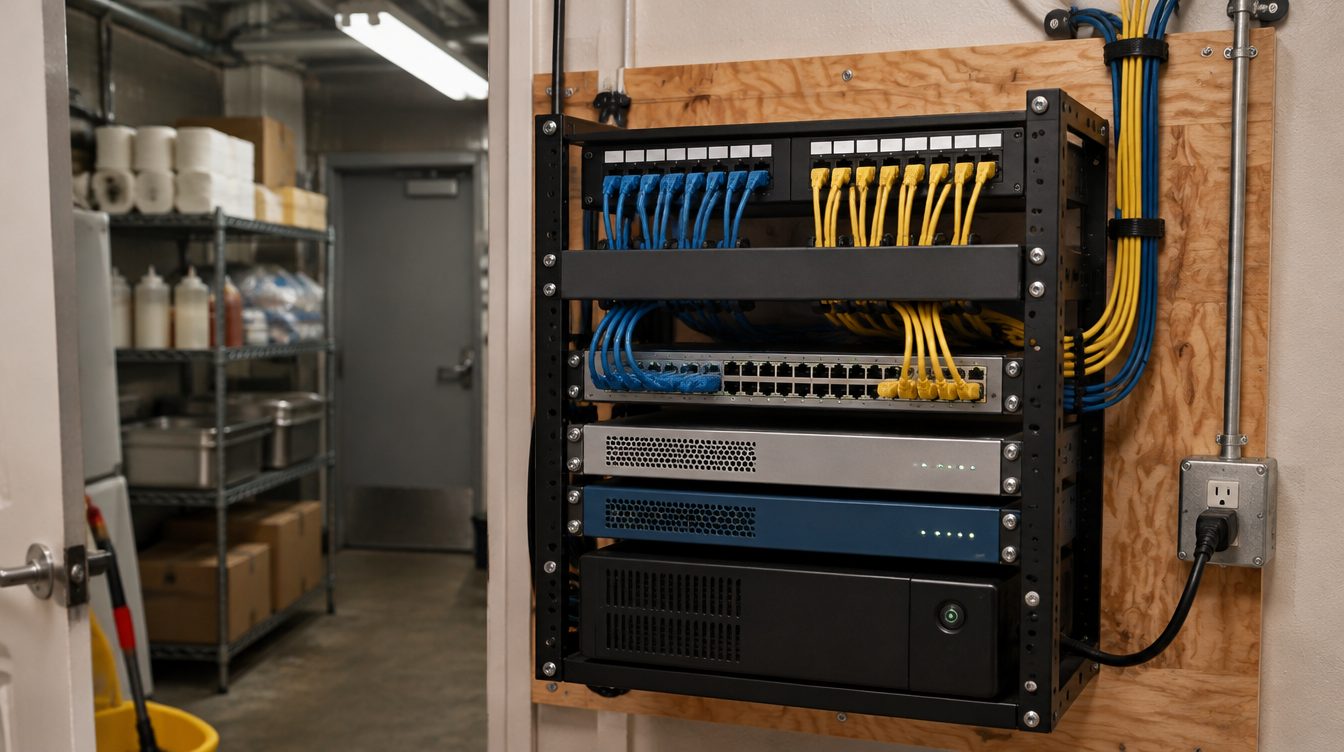
After a Seattle restaurant opens, the network from the buildout carries the whole service: card terminals, kitchen printers, line screens, delivery tablets, the camera recorder and the back-office PC all depend on one rack. ClearMax Labs managed IT keeps that gear in shape each month with network monitoring, cybersecurity and backups, so most problems surface as an alert instead of a frozen ticket printer in the middle of a rush.
Last updated: November 2026
Covered under the plan
- Network monitoring: the internet line, firewall, switch and each WiFi radio are watched around the clock, and an alert goes out when one drops offline or the connection degrades.
- Cybersecurity: scheduled review of firewall rules, current firmware on the router, switch and radios, and endpoint protection with patching on the office PC.
- The payment network stays separate: Toast, as one register vendor, recommends physically segmenting the network from other outside traffic, and that separation is kept intact each time a new tablet, printer or screen joins.
- Backups: copies of the office PC's files and of each network device's configuration, so a failed unit can be swapped and restored the same day.
- Camera checks: recorder storage and each camera's image are reviewed, so a dark view is caught long before anyone needs the footage.
- Remote support: a manager calls or uses the form when something stops working, and most issues are resolved without a site visit.
A clear record if card data is ever exposed
Washington gives a business a fixed window to notify people after a breach. RCW 19.255.010(8) says notice to affected consumers must be made in the most expedient time possible, without unreasonable delay, and no more than thirty calendar days after the breach was discovered, unless the delay is at the request of law enforcement. The firewall, switch and camera records kept under the plan give the owner and their advisers a timeline of what was touched and when.
How a restaurant network drifts after opening
A network that was clean on opening day changes fast. A cook plugs a charger into a spare jack, a delivery app sends one more tablet, and a full Friday room floods the air with guest phones. Default admin passwords are replaced and stored under the owner's account, a manager who leaves loses access that week, and updates are scheduled after close rather than during service.
The owner gets a short plain-language note each month: what alerted, what was patched, what changed, and what is coming up, such as a radio nearing the end of its firmware support or a camera drive filling faster than planned.
Rainy-season WiFi on the sidewalk and in the vestibule
Seattle seating moves with the weather. Covered sidewalk tables, heaters and a closed vestibule in the wet months change where handhelds connect, and a server's device that worked fine at the curb in August starts losing orders in November. Monitoring shows which radio each handheld is holding onto and where the signal fades, so the fix is a moved or added radio on the existing cabling instead of guessing mid-service.
Who calls the POS company and the carrier
The register vendor owns its terminals and software, and the internet provider owns its line up to its modem. The firewall, switch, radios, cable, cameras and office PC in between are ClearMax's to look after. When a fault traces back to the vendor or the carrier, ClearMax opens the ticket and stays on it until it closes, so the manager is not stuck on hold during lunch.
Starting the plan in a restaurant that is already open
A restaurant ClearMax wired starts with its drawings and logins already on file. If another installer built the network, the first visit maps what is there and tests the key runs, and any repairs are written up before monitoring begins. The quote is built from that restaurant's details, and if the scope changes it is raised and the bid updated before work continues.
Owners still in planning can begin with the buildout overview and add the plan after opening.